
Let your colleagues cover for you with substitutes
Updated October 2026
What a substitute does while you're away
A substitute is the person your team goes to while you're out. They don't do your whole job. They answer the questions that can't wait, keep an eye on anything urgent, and know where to find what you left behind.
Without one, people guess. They message you on vacation, ping your manager, or let things sit for a week. Naming a substitute upfront fixes that in one step: everyone knows who's covering before you've even left.
It takes pressure off the person who's away too. Knowing someone has it covered is the difference between a real break and checking Slack from the beach.
One heads-up on the term: in some countries "substitute leave" also means a day off you get in place of a public holiday you worked. This post is about the other meaning, where a colleague covers for someone who's off.
Who should cover when someone is off
The best substitute is usually a teammate who already knows the context: same team, similar role, and enough access to unblock work. A few things help:
- Check they're actually around. Look at the team calendar first. Spock doesn't stop you from picking someone who's off at the same time, so it's worth a two-second look.
- Ask before you name them. Being picked shouldn't be a surprise.
- Leave a short handover note. What's in flight, what can wait, and who to escalate to.
- Keep it to one person. One clear name beats "ask anyone on the team".
On a small team, the same person can end up covering for everyone. Rotate it when you can, and try not to make one colleague the substitute for two people at once. If nobody has the right context, a manager is a fine fallback, as long as they know they're it.
How to turn on Substitutes in Spock
Substitutes are set per leave type, so you can ask for cover on vacation but skip it for a sick day. A General Manager opens the leave type in Spock's settings and picks one of three Substitute Coverage options:
- Don't ask for substitute. No substitute field (this is the default).
- Allow substitute (optional). People can name someone but don't have to.
- Require substitute (mandatory). The request can't be sent without one.
Substitutes are part of the Professional plan.
Making it required works well for roles where something always needs an owner, like support, sales or on-call. Optional is the friendlier default for everyone else.
Pick a substitute when you request time off
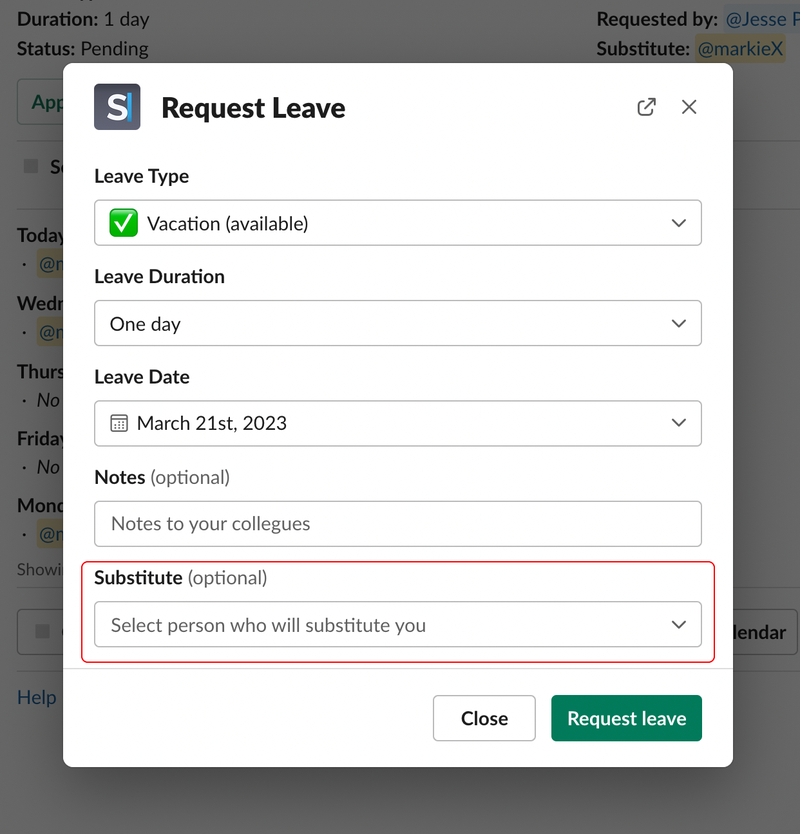
Once it's on, the time off request in Slack gets one extra field: Substitute. Choose the colleague who'll cover you and send the request as usual. Your substitute has to be an active Spock user in your workspace, and you can't pick yourself.
Spock sends your substitute a Slack message saying they've been assigned, with the dates and leave type. Your approver sees the substitute in the approval request too, and can change it when they approve if someone else makes more sense.
Change or remove your substitute
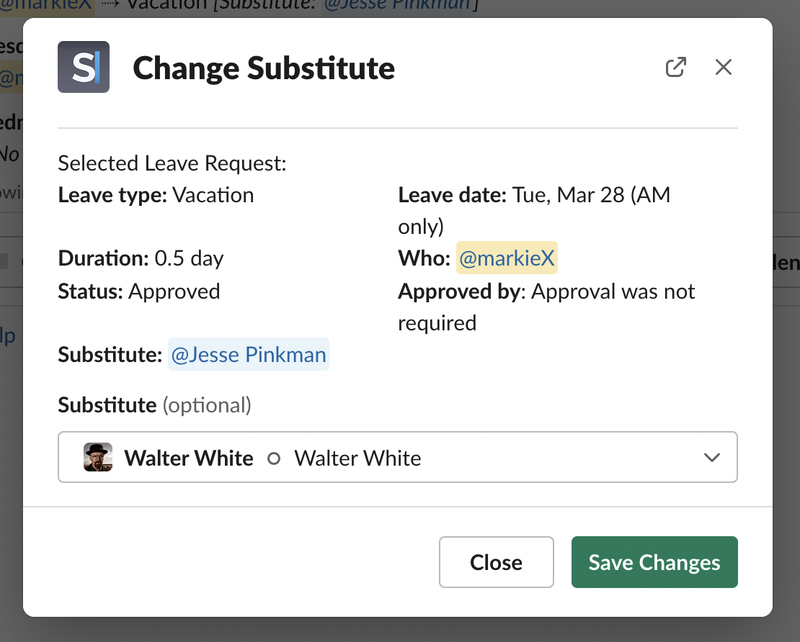
Plans change. To swap your substitute, open Spock's Home tab in Slack, click My leave, find the request, open the ⋯ menu and choose Change Substitute. Pick someone new, or clear the field to remove the substitute, then save. You can do this until two days after your time off starts.
If your substitute gets sick or their own plans change, swap them out the same way. It takes a few seconds, and the new person gets the details straight away.
Everyone affected hears about it: the new substitute, the old one, and your approver all get a Slack message, so nobody's left covering for you by accident.
Where your team sees who's covering
The point of a substitute is that people can find them without asking. Spock shows the name wherever your time off shows up in Slack:
- in the "who's out" lists on the Home tab and in the daily morning report
- in channel and team reports, next to your name
- in your Slack status, for example "On Vacation (Until Oct 24) - Substitute: Jane Doe"
- in the leave details your manager sees when approving
So when someone goes to message you, they see who to talk to instead. For the full setup, see the Substitutes guide in our docs.
Substitutes are one small part of keeping time off visible. If your team still tracks who's out in a spreadsheet or a pinned message, take a look at Spock, a vacation tracker for Slack where requests, approvals, balances and cover all live in the same place your team already talks.
Frequently asked questions
What is substitute leave?
It's when a colleague is named to cover someone's work while they're on leave. The substitute answers urgent questions and keeps things moving until the person is back. In some countries the term also means a day off given in place of a public holiday worked.
Who covers when someone is off?
Usually a teammate with the same context: someone on the same team or in a similar role who's around on those dates. Ask them first and leave a short handover note.
How do I assign a substitute in Slack?
With Spock, a General Manager turns on Substitute Coverage for the leave type. You then pick your substitute in the Substitute field of your time off request in Slack, and Spock messages them that they've been assigned.
Can a manager change the substitute?
Yes. The approver can set or change the substitute while approving the request. You can also change it yourself from My leave in Spock's Home tab, up to two days after your time off starts.
Does the substitute get notified?
Yes. Spock sends them a Slack message when they're assigned or removed, and their name shows in the team's daily lists and in your Slack status while you're off.